Showing posts with label interesting. Show all posts

Sunday, June 24, 2012

Power Lines Do Effect Us or Do Power Lines effect Us?

Here is a nice view of the Bourgogne countryside from Joël's room. Of course there are the ever present Charolaise grazing on the hills.

Image by Gros Chigy is licensed under a Creative Commons Attribution-NonCommercial-ShareAlike 3.0 Unported License.

This sight got me to thinking about a study I had heard about on a podcast a few months ago, regarding the way cattle stand in fields.

Of course "they stand with their rears to the wind in a rainstorm" makes a lot of sense, otherwise things would be very uncomfortable. But this study was about the way cattle stand in circumstances that offer more freedom.

It was in 2008 that a German team of scientists claimed that they had found that herds of cattle tend to orientate themselves with the magnetic lines of the earth. Interestingly this was proven by comparing herds close to and well removed from overhead power lines. The reasoning being that the power lines would result in herds nearby not being able to orientate themselves to the earths magnetic lines because their sensing system would be disrupted by the magnetic field from the lines.

What I like most about this story is the innovative use of free information available in Google Earth.

There has been some discussion about the results with another team not being to replicate the results, but the original results, at least for now seem to remain valid!

At a casual glance the two herds in this photo seem to be orientated in a similar direction, although one is under a power lines. Of course two observations don't constitute proof! So I wonder If and how the power lines effect us?

Thursday, June 21, 2012

Unfamiliar Products in Supermarkets

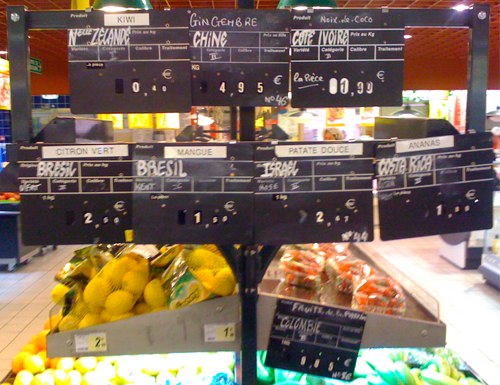
Of course the brands and the products differ between France and South Africa. There is also a difference in the emphasis on and length of shelves for the different types of food. For instance many more wines, cheeses, chocolates and coffees but fewer juices, sweets and snacks. But also totally, quite surprising totally different products - we will start with two that are rather peculiar.

Purple chips, are not something I'm waiting for in South Africa with bated breath:

Image by Gros Chigy is licensed under a Creative Commons Attribution-NonCommercial-ShareAlike 3.0 Unported License.

These chips are still sold into the natural no artificial additives, because the purple colouring used is natural. Added to this, like many other chips in France, it is emphasized that the chips were fried in sunflower oil. The chips are sold on the basis of how great they will look as a snack at a special party!

The other item that amused was the toilet paper with the flushable centre roll.

Image by Gros Chigy is licensed under a Creative Commons Attribution-NonCommercial-ShareAlike 3.0 Unported License.

This seems rather unuseful in South Africa where recycling is much less developed. Also in France the shops offering organic chemicals to promote the functioning of Independent sewage disposal systems illustrates the lack of robust waterborne sewerage systems that South Africa has in many areas.

Having got over the inevitable settling in period, I hope to be offering more frequent blogs in the future.

Sunday, November 27, 2011

A Few Pleasing Photos From Our Last Stay.

The shots below are some of the pleasing results I got during our last stay. 

 A waterfall in Aurvergne 
photograph by ChigyTweeter
published under a Creative Commons Attribution-NonCommercial-ShareAlike license.

 A barge on the Montceu les Mines canal 
photograph by ChigyTweeter
published under a Creative Commons Attribution-NonCommercial-ShareAlike license.

 A stall at the Cluny market
photograph by ChigyTweeter
published under a Creative Commons Attribution-NonCommercial-ShareAlike license.

Friday, November 11, 2011

Parking in France

Going through my photos from the last 5 months, I came across this one which I had forgotten.

photograph by ChigyTweeter
published under a Creative Commons Attribution-NonCommercial-ShareAlike license.

It's taken in a back street in St Flour and shows this car stopped in the middle of the road. As I watched the car drew up and a guy got out and went into a medical centre with some package or other. His car sat there in the middle of the road holding up others for several minutes.

It's obvious from the photo that he was effecting several cars. In Cluny he would have driven up onto the pavement, in Nice the hooting would have been deafening, in South Africa it would spark racial jibes - while here he just put his hazards on and went about his business.

Sunday, November 6, 2011

Catching Up on What We Did

Our time at The House at Le Gros Chigy turned out to be much busier than we expected, especially with the house renovation which took a lot of our time. One of the results of this was that there is a lot that I didn't blog at the time - so you will see some of these posts over the next while.

We were always surprised by the number of activities that there always seemed to be on the go in the villages around the region. One of these was was in the Church at Saint-Vincent-des-Pres.

published under a Creative Commons Attribution-NonCommercial-ShareAlike license.

This was an evening of music by The Black Velvet Band three Austrians from Germany singing Irish songs in a French church! This is an amazing band which still attacks their music with passion after playing and touring for more than 20 years. They are well known in the area and even have a CD entitled "en Bourgogne"

Of course the church is not that large and supports it's roof with rather too many columns for good uninterrupted viewing. We therefore ended up to the side of the later. This have us a very close up view of the singers, although from the side.

published under a Creative Commons Attribution-NonCommercial-ShareAlike license.

The three are Christiaan Hartung the violinist, Udo Hafner the percussionist and flautist and Peter Wendel the guitarist and singer - we thank them very much for a great evening!

Thursday, October 13, 2011

Looking Closer For Interesting Images

This rather uninteresting view of the entrance to a Marie, becomes more interesting as you move closer.

Wednesday, September 28, 2011

Taking in Fuel For The Winter

This is something foreign to a South African!

The House at La Gros Chigy is centrally heated with a fuel oil burning system that also supplies hot water to the house and now was the time to take on the oil necessary to last until we return. Getting the fuel to the tank was easy.

FuelTransfer
photograph by ChigyTweeter
published under a Creative Commons Attribution-NonCommercial-ShareAlike license.


The two more difficult things were getting the right amount of fuel into the tank and getting the tanker back on its rounds.

Having no idea how much fuel we had used I went to measure the tank and calculate the consumption from the level readings I had taken. BUt this was no simple cylindrical tank, but a design with two rectangular tanks connected by three vertical much smaller tanks. According to the fuel man this was a design that ensured the strength of the tank but made its volume "incalculable".

So we filled 1000l into the tank in 200 l batches and measured the depth reading on the meter. These readings and some fiddling with a spreadsheet should allowe me to get a rough idea of the size of the tank and our the consumption since we first took in fuel.

The difficulty in getting the tanker back on its route was simpler and only about squeezing out to the St Andre road.

TankerSqueezing
photograph by ChigyTweeter
published under a Creative Commons Attribution-NonCommercial-ShareAlike license.


Having worked for a community group trying to maintain the high standards that control building in our suburb, I find this picture interesting. In our suburb all roads have a 2m sidewalk between the road and the property boundary. Then each property has a limit of some meters (1.5 to 7) on how close they can build to this boundary. Here we have two buildings built right up to the road.

The difference of course is the epoch in which the buildings in the picture were built. It was before cars, let alone fuel tankers! Also the original buildings were farm houses grouped into a community rather than a planned urban development.

Sunday, August 28, 2011

Business Premises in Montceaux les Mines

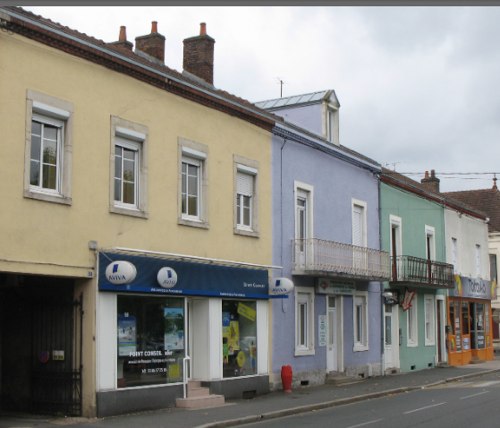
Waiting on some others doing business in the city centre the other day, I was struck by this row of businesses in what I suspect had been houses serving the factories along the canal.

Montceau Shops alongside the canal parking area near the city centre
photograph by ChigyTweeter
published under a Creative Commons Attribution-NonCommercial-ShareAlike license.


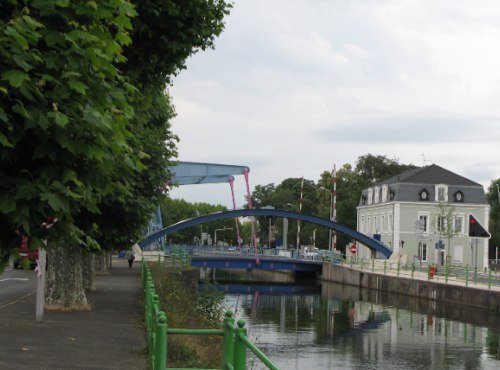
Besides being very different to shops near the city centre in South Africa the variety of colors and the different ways in which buildings are used makes the row attractive. The trees lining the parking across the street add to the pleasantness.

Tree Lined Streets along the streets in
photograph by ChigyTweeter
published under a Creative Commons Attribution-NonCommercial-ShareAlike license.


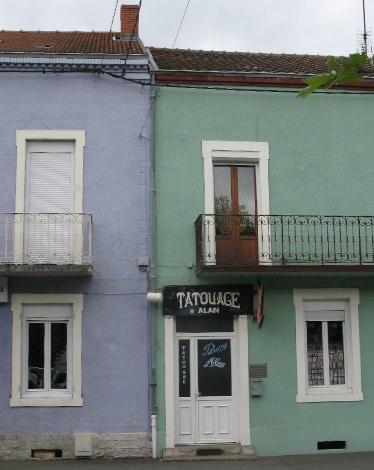
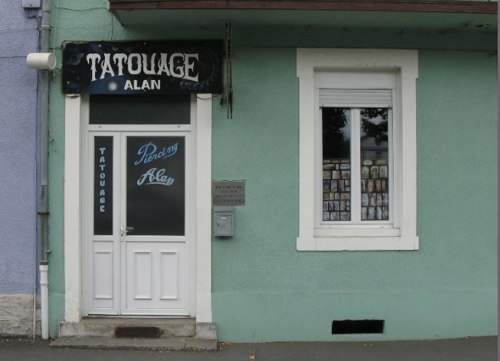
The third building in the row was particularly interesting and is the subject of the next few photos. By the way I can see my posts are becoming more and more image based - what do you think? is there something else you would prefer? For example more on the development of the house or on information appropriate to holidaying in the area?
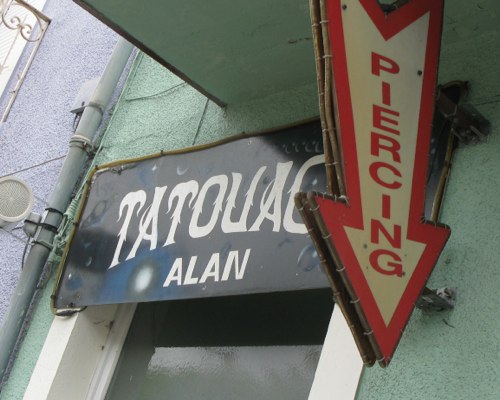
A Tatoo Shop in the row of shops in Montceau
 
Entrance to a Tatoo Shop in the row of shops in Montceau
 
Multi Tasking Tatoo Shop in the row of shops in Montceau
 
photographs by ChigyTweeter
published under a Creative Commons Attribution-NonCommercial-ShareAlike license.

Thursday, July 28, 2011

iPhoneography in Montceau le Mines, Bourgogne.

I was in Montceau Le Mines yesterday without my point and shoot and got to thinking about some of the podcasts I had heard lately that were promoting the iPhone Camera as a device that could make good artistic images which could even be printed at reasonable size.

I therefore strolled around a bit and looked for some subjects that suited the camera specifications of my 3G iPhone.

Close up of a frog in garage door graffiti
photograph by ChigyTweeter
published under a Creative Commons Attribution-NonCommercial-ShareAlike license.


This was an ideal subject as it was on a garage door across the street so there were no focus issues and no light areas which would test the exposure range of the 3G - so its easy to look good.

To me this photos and those below, seem pretty good especially when comparing them to some of what I've come across online such as iPhoneography.com, iPhoneart.com, Jack Holingsworth and flickr-takenwithiphone.

Seems like one of two things happen that don't encourage good iPhonePhotos - photographers get too gimmicky, accept poorer quality or simply put a filter on a poor photo and think its arty!

Close up of a Motor Bike's controls in Montceau les Mines.
photograph by ChigyTweeter
published under a Creative Commons Attribution-NonCommercial-ShareAlike license.

 
Signs Silhouets Montceau Le Mines
photograph by ChigyTweeter
published under a Creative Commons Attribution-NonCommercial-ShareAlike license.


So what do you think of the iPhone photography movement? Contact me with your thoughts or comment below!

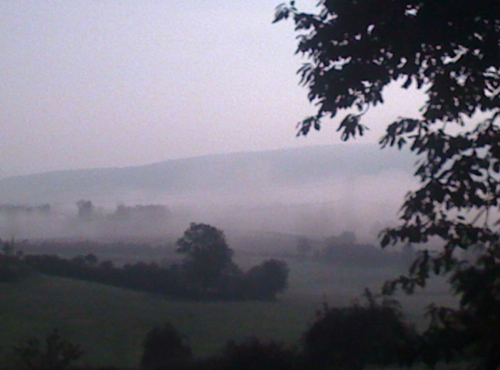
And the next morning back at the calm of The House at Le Gros Chigy.

Morning Mist in the Tranquility of Le Gros Chigy
photograph by ChigyTweeter
published under a Creative Commons Attribution-NonCommercial-ShareAlike license.


Thursday, July 21, 2011

Colours at the Market

Being off line and using the iPad allowed me to play a bit with some of the interesting graphics programmes for Apple.

A combination of a number of shots of colourful vegetables at markets.
photographs and composite by ChigyTweet
published under a Creative Commons Attribution-NonCommercial-ShareAlike license.


This one was produced using the free SketchBook Express and simply copying clips into the applications layers.

Friday, June 24, 2011

French Bread 1 - Carbon Footprints & Global Warming Around The Bakery

The fact that "casser la croûte", which literally means break the crust, can mean such diverse things as have dinner, take a bite, have a snack, munch, grab a bite and eat indicates how central bread is to eating in France!

Bread is part of all French  meals
photograph by ChigyTweet
published under a Creative Commons Attribution-NonCommercial-ShareAlike license.


The Baguette is probably the most eaten bread in France and definitely the one anglophones think of as "French Bread". It is very different to the bread sliced bread most popular in anglophone countries, mainly as the crust is what one looks for in the baguette while its the part left in sliced bread.

There are lots of interesting things to talk about in baking and bread in France, some of which I will cover in later posts. This time I find it interesting to look at the environmental impact of bread and the way its bought.

Get up early in the morning, go to a bakery and see Frenchmen coming in to get bread for their breakfast - yesterdays bread is not fresh and crispy enough for a good tartine! If you are at a bakery in a village, its striking that many people drive to collect their bread.

What is interesting from a global waring viewpoint is how the carbon footprint of transporting the bread compares with that of making the bread.

Just for those not yet following this - it has been found that the average temperature worldwide has increased increasingly rapidly over the last 30 years - now known as Global Warming. This increase has been linked to the increased emissions of gasses such as Carbon Dioxide (CO₂) and Methane which contribute to the greenhouse effect of the atmosphere - therefore the name greenhouse gas. A continued increase in temperature threatens much including water levels, agriculture and desertification. There is therefore a focus on decreasing the emission of these gasses. CO₂ has become a kind of measuring stick for emissions with the quantity emitted being termed the carbon footprint.

Electric Bread Baking Oven
photograph by Sifu Renka
published under a Creative Commons Attribution-NonCommercial-ShareAlike license.


Making bread in the United Kingdom, has been calculated to release 1220 to 1555 grams of CO₂ per kilogram of bread. Its interesting that of this energy 41% comes from the production of raw materials, 19% from processing and 25% (at least in the UK) from refrigeration and toasting in the home. Since a baguette normally weighs 250 gram and is never frozen or toasted it will produce at most 292 grams of CO₂ in its manufacture.

The shortest distance I need to drive to get to the bakery for my baguette is 2,5 kilometers. Since my car produces 189 gram of CO₂ per kilometer travelled I will have emitted 945 gram CO2 - more than three times as much as the bread I buy.

This raises all sorts of thoughts and ideas - could bread be delivered in bulk to villages, could neighbours buy for each other, would frozen dough baked at home give an acceptable bread or should the French change their eating habits.

Sunday, June 5, 2011

Magpie Trapping Near The House at Le Gros Chigy.

In a previous post I mentioned that the Magpie was one of the birds we had seen at Le Gros Chigy. I didn't know some of the issues around this bird, which are reflected by the contraption below that we came across in a field just past the House at Le Gros Chigy. I just thought Magpies were very clever birds that like shinny things!

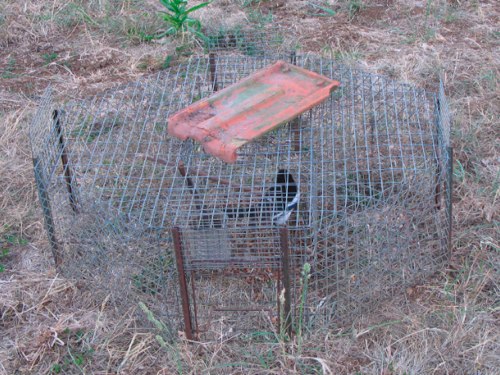
Octogonal, four cage Magpie trap showing
photograph by ChigyTweet
published under a Creative Commons Attribution-NonCommercial-ShareAlike license.


This shows a trap which we found in a field. The Magpie is in the centre compartment and attracts others which enter through one of the four doors. They are trapped as the door is released behind them by the their weight on the floor of the segment. This kind of trap also works for crows.

The photo is pretty unclear, so there are separate photos of a Eurasian Magpie and a trap which give a bit more detail.

The Magpie is not found in South Africa, or the Southern Hemisphere for that matter, although its widespread in the Northern hemisphere. I was therefore not aware of the fact that it is mainly seen as a pest. For once the conservationists and the hunters seem to have the same view, because one of the Magpie's foods is young birds and eggs.

Picture of Magpie from Wikimedia Commons
published under a Creative Commons Attribution-NonCommercial-ShareAlike license.


The bird watchers accuse the Magpie of decimating garden birds by preying on the nests, decreasing the number of young birds reaching adulthood. In the UK there is still discussion on the real impact of this on populations, but the fact that the numbers of Magpies have grown steadily supports the hypothesis. Although a counter hypothesis is that Magpie numbers increased with the number of cars, as the amount of road kill improved the food supply!

The hunters are even more worried because the Magpie effects the number of live game birds available at the start of the hunting season. The 30 million live game birds released from breeding farms are not effected by the Magpies but the wild birds are especially during the nesting phase. This is a powerful lobby of influential people so its interesting to see that the Magpies seem to have the upper hand.

The farmers feel that their livelihoods are effected by the Magpie who are omnivores and also eat fruit and cereals.

Therefore there's quite a widespread movement to eliminate or at least control/reduce the number of Magpies.

Multi catch crow/magpie live trap
click image to visit site


In the United States the Magpie is protected as a migratory non game bird, but special conditions are in place allowing their elimination when they are found to be or about to be damaging agricultural outputs. In the UK complicated licensing and rules place constraints on the methods a trapper may use to trap Magpies. In France it appears that, so long as its your land, their are few restrictions.

The Magpies are normally attracted to the trap by placing suitable food or a live "bait bird " in the central compartment of the trap. In the case of the trap we saw the bait bird was very agitated and it didn't seem a very humane operation. One article I read, stated that it was not really inhumane as the bait bird was killed each time a bird was trapped, as the caught bird became the bait bird!

Wednesday, May 25, 2011

Cherries at The House at Le Gros Chigy

We arrived today and were quickly sampling the amazing cherries!

A basket of cherries picked for a relative.
photograph by ChigyTweet
published under a Creative Commons Attribution-NonCommercial-ShareAlike license.


There are still an amazing crop of cherries. However, the least ripe are already red, so the crop does not have long to go. Lets hope it lasts until the next arrivals!

Wednesday, May 18, 2011

Thinking About What To Do When We Arrive - Clunisois villages 1

Now that our return is approaching, I am starting to think about what to do and maybe what photographic theme to attack when we get back to The House at Le Gros Chigy. A good place to start is the small Clunisois villages in the area. I am going to be publishing single screen clips of the villages, maybe with a sentence or two, over the next while.

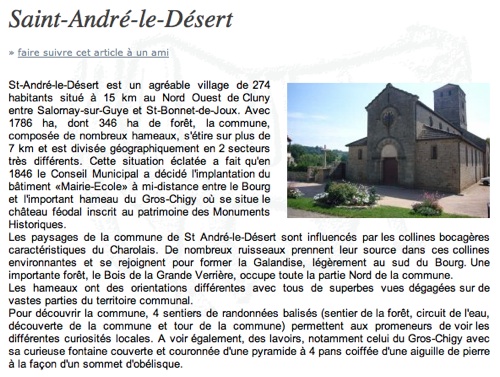
Obviously the place to start is St-André-le-Désert the "capital" of our commune.

A screenshot from the villages du Clunisois website.
click image to visit site


Wednesday, October 27, 2010

Charolaise Beef Cattle From Around Le Gros Chigy.

I crossed paths with Charolais cattle a few times today. The first was early in the morning as I drove to buy bread and dropped from the 312 m altitude of The House at Le Gros Chigy to the 239 m of the Salornay Saint Andre la Desert road. The temperature plunged from what must have been around freezing at Le Gros Chigy to a heavy frost along the road that runs along the river.

It was a case of white cows on the white grass!

White Charolais cattle on a frost covered white field early in the morning near Le Gros Chigy.
photo by ChigyTweet
(Creative Commons Some Limitations License)


The Charolais are very much part of the rural scenery, dotting the green fields with their brilliant white, broken only by the dark patches on the rump. They are a world renowned breed of beef cattle that originated in Charolais, around Charolles which is just 25 km away from The House at Le Gros Chigy to the west.

As the weather gets colder its my understanding that the cattle are housed in barns.

iPhoto-2.jpg
photo by ChigyTweet
(Creative Commons Some Limitations License)


This one has it entrance decorated with the awards this farm's herd has won over the years at agricultural shows.

Later in the day and higher up the hill (near Le Bourg-Rameau at 329 m high) the weather was fine and warm leaving 8718 with a somewhat more relaxed and inquisitive view on things!

iPhoto-3.jpg
photo by ChigyTweet
(Creative Commons Some Limitations License)


I do notice that some of the farms are starting to cross the Charolaise with darker cattle, some that look very much like Jerseys but that doesn't seem to make much sense. Anyway my thought is will these iconic white cattle on bright green pastures become a less common site in Bourgogne?

Sunday, October 24, 2010

Four Day to Day Things That Have Interested Me in France

These are just a few unrelated things, for no particular purpose and in no particular order that I've been interested to note while in France!

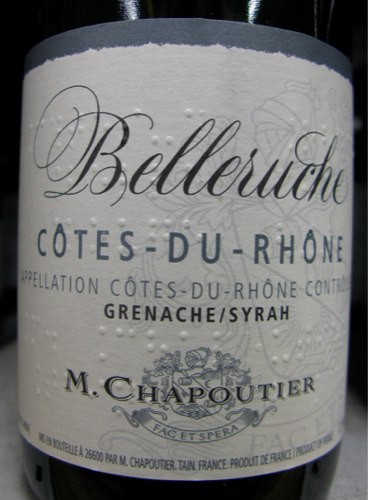
The first one is braille on wine bottle labels, they are clear on the image of a bottle of wine below.

Braille_Wine_lable-1.jpg
photo by ChigyTweet
(Creative Commons Some Limitations License)


This is quite something since it seems to be only on a few bottles out of the hundreds on the shelf. The worry though is how the blind person finds these in the supermarket and amongst all the other bottles. I'm not sure whether the label was also designed for the colour blind?

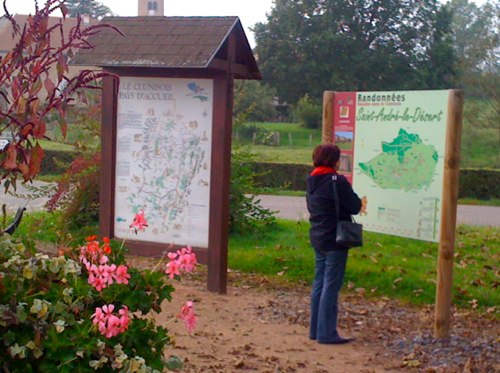
The very second the clear and numerous boards with tourist information

An example of the numerous localised tourist information boards scattered around the region<br />
photo by ChigyTweet
(Creative Commons Some Limitations License)


These maps normally show local point of interest and walks as well as a larger view of where the village fits into the region as well as the main points of interest. They are well distributed around the area. I will be posting several to allow the user to do some planning and understant the region before the start of their holiday!

The significant amount of food that travels a long way

Distant_Food.jpg

As we now know its not as simple as to say if it comes from far away it has a negative impact. Also quality has to enter the picture as I found myself buying distant food more because it appeared to be of poor quality than it was more expensive than the local alternative.

Last and least cheerful an apparent recent change in grave decoration

Complex_Grave_Decoration.jpg
photo by ChigyTweet
(Creative Commons Some Limitations License)


As this image shows there now seems to be a trend towards custom and independent tributes collected on the grave. In this case Joseph Remetter's grave shows his attachments to travel fishing and hunting through items on his grave. In several places it reflects a river flowing through a town which was obviously an important part of his life. The painting of a river across his marble tombstone and the photo of him and his camper are quite unusual but his complex grave, when compared to the simple cross focussed graves of some decades ago is clearly very different.